Driving Education
Where to Practice Driving in Brampton: Best Places for Learners & Road-Test Practice
Where you should practice depends on where you're starting from:
- Complete beginner? Start in a controlled, low-traffic space.
- Can steer, stop and start smoothly? Move to quiet residential streets.
- Comfortable on residential roads? Add busier suburban roads with lights and lane changes.
- Prepping for a road test? Mix all three — one repeated route isn't enough.
Below are the actual places in Brampton set aside for driving practice, what each is good for, and what you need to know before you use them.
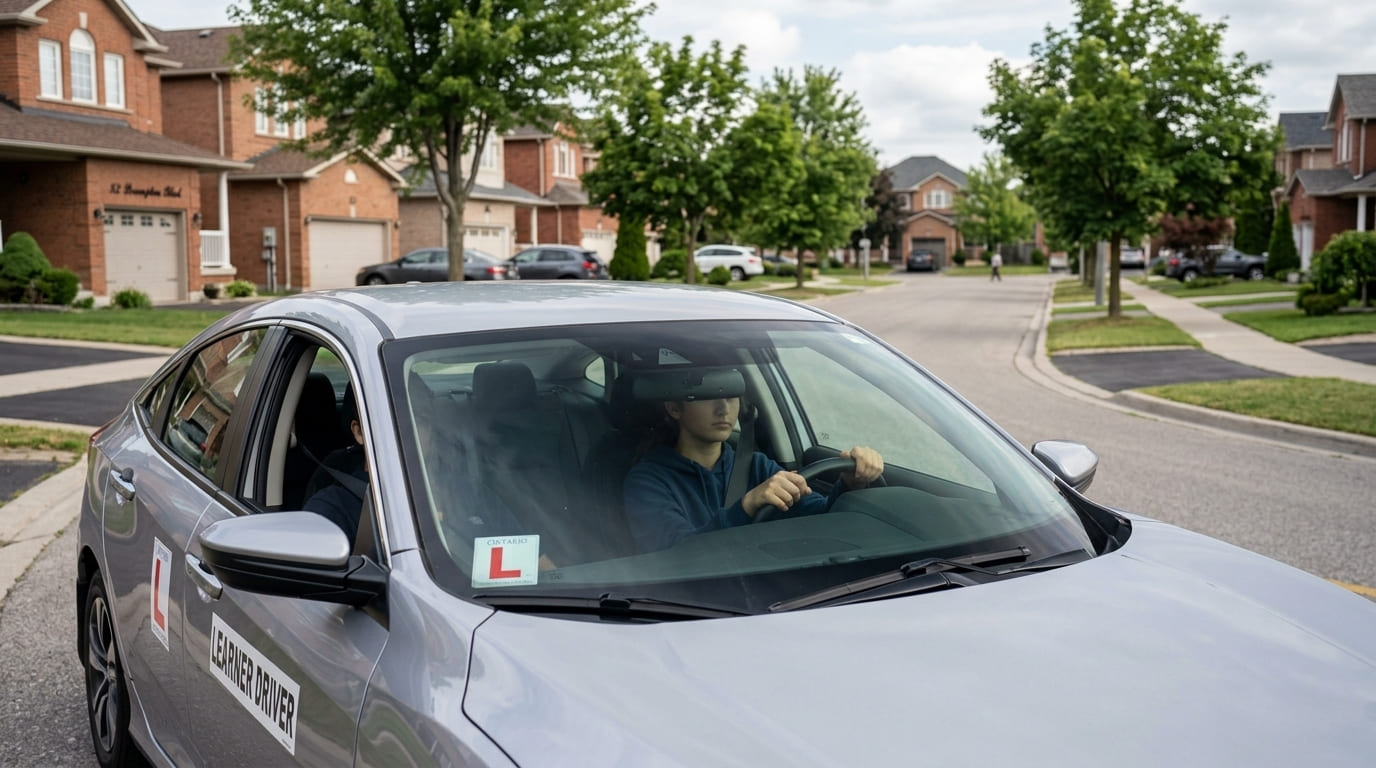
Where to Practice Driving in Brampton
The City of Brampton has one formally designated set of locations for driving instruction: the Driving Instruction Zones program. It covers six recreation-centre parking lots, each with a signed area set aside specifically for driving lessons.
| Location | Address | Best for | Note |
|---|---|---|---|
| Cassie Campbell Community Centre | 1050 Sandalwood Parkway West | Basic control, slow manoeuvres | Licensed-instructor zone; signed area only |
| Century Gardens Recreation Centre | 340 Vodden Street East | Basic control, slow manoeuvres | Licensed-instructor zone; signed area only |
| Earnscliffe Recreation Centre | 44 Eastbourne Drive | Basic control, slow manoeuvres | Licensed-instructor zone; signed area only |
| Gore Meadows Community Centre | 10150 The Gore Road | Basic control, slow manoeuvres | Licensed-instructor zone; signed area only |
| Brampton Soccer Centre | 1495 Sandalwood Parkway East | Basic control, slow manoeuvres | Licensed-instructor zone; signed area only |
| Susan Fennell Sportsplex | 500 Ray Lawson Boulevard | Basic control, slow manoeuvres | Licensed-instructor zone; signed area only |
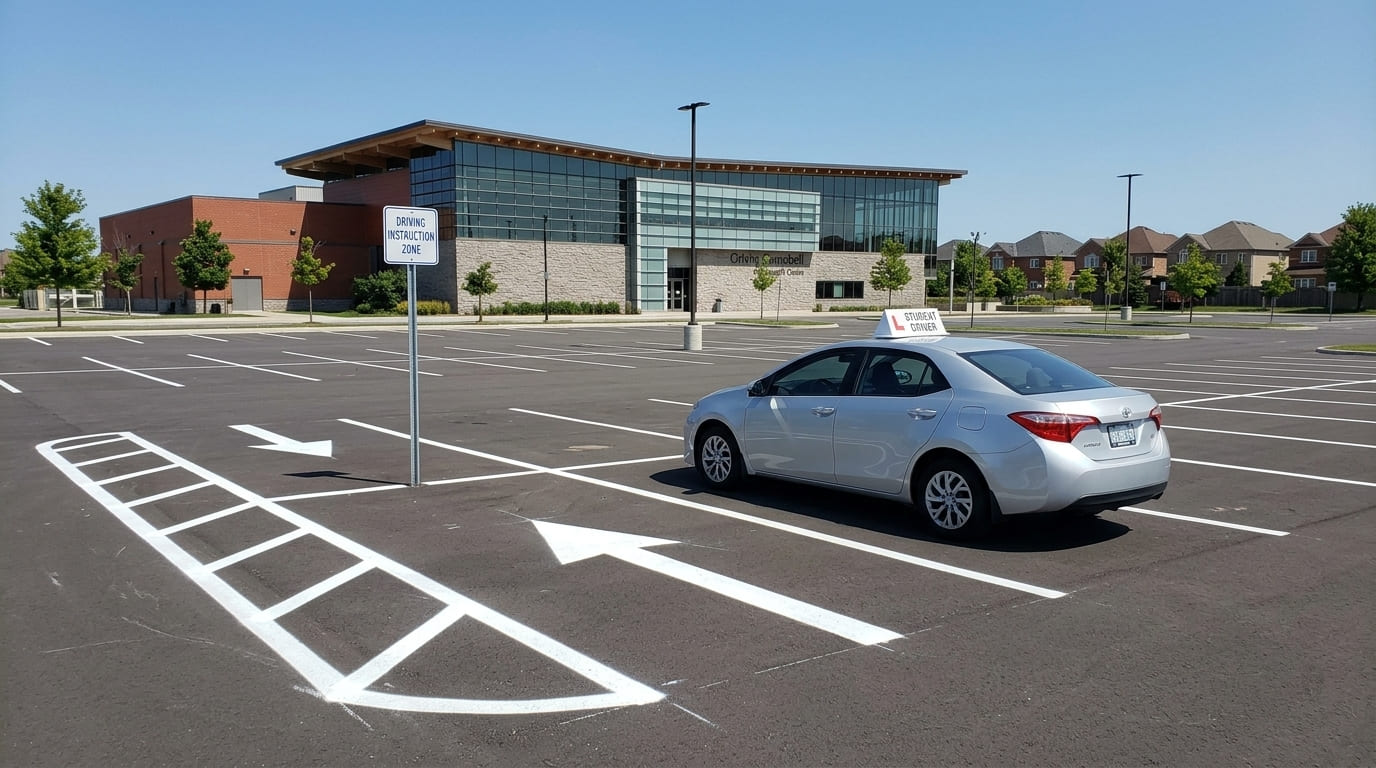
Who these are actually for
- These zones are set up for licensed driving school instructors and operators — not unsupervised self-practice or general parent-and-learner sessions.
- The City's mobile licensing by-law restricts use to the posted, designated portion of the lot. Showing up and using whatever space looks open isn't the same as using the zone correctly.
- Taking lessons with an instructor? Ask whether they use one of these locations for your early sessions.
- Practising with a parent or another qualified accompanying driver instead? You'll generally want ordinary public roads that suit your level — see the sections below.
Brampton's Driving Instruction Zones, Explained
The program began as a pilot in 2024 and became a permanent program in 2026. Under the current rules:
- Driving instruction is permitted seven days a week, with no restricted hours.
- Instructors no longer need to register or book a time slot in advance.
- Up to five instructor vehicles can use a location at one time.
- Instruction is only allowed within the designated, signed area of each lot — not the whole parking lot.
Note: older articles describing a $25 registration fee, a Monday-to-Friday booking window, or a maximum of ten vehicles reflect the earlier pilot rules. Those no longer apply.
Which Place Should You Choose?
Match your current skill level to the right type of location rather than picking somewhere at random.
| If you need to practice... | Look for... |
|---|---|
| Starting, stopping and steering | A controlled, low-traffic area, ideally with an instructor in a designated zone |
| Parking and basic manoeuvres | An open space where practice is confirmed to be permitted |
| Stop signs and basic turns | Quiet residential streets near home |
| Traffic lights and lane changes | Busier suburban roads with moderate traffic |
| Road-test preparation | A mix of residential and busier roads, including the area around your test centre |
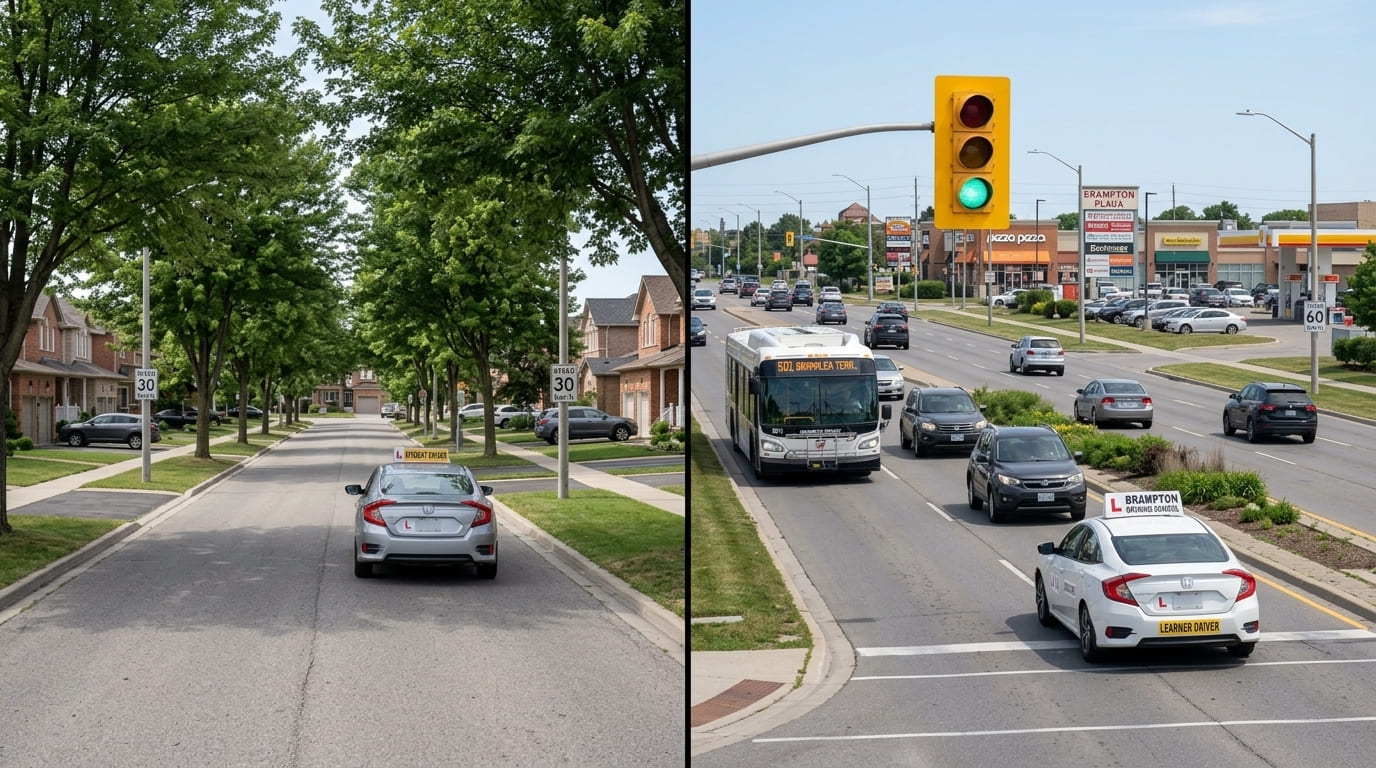
A driving instructor in Brampton can be useful here — they already know which residential and arterial routes near you suit each stage, so you're not guessing.
Should You Practice Near the Brampton DriveTest Centre?
The Brampton DriveTest Centre is located at Shoppers World Mall, 499 Main St. S., Unit 064, Brampton, ON L6Y 1N7, and offers G2 and G road tests.
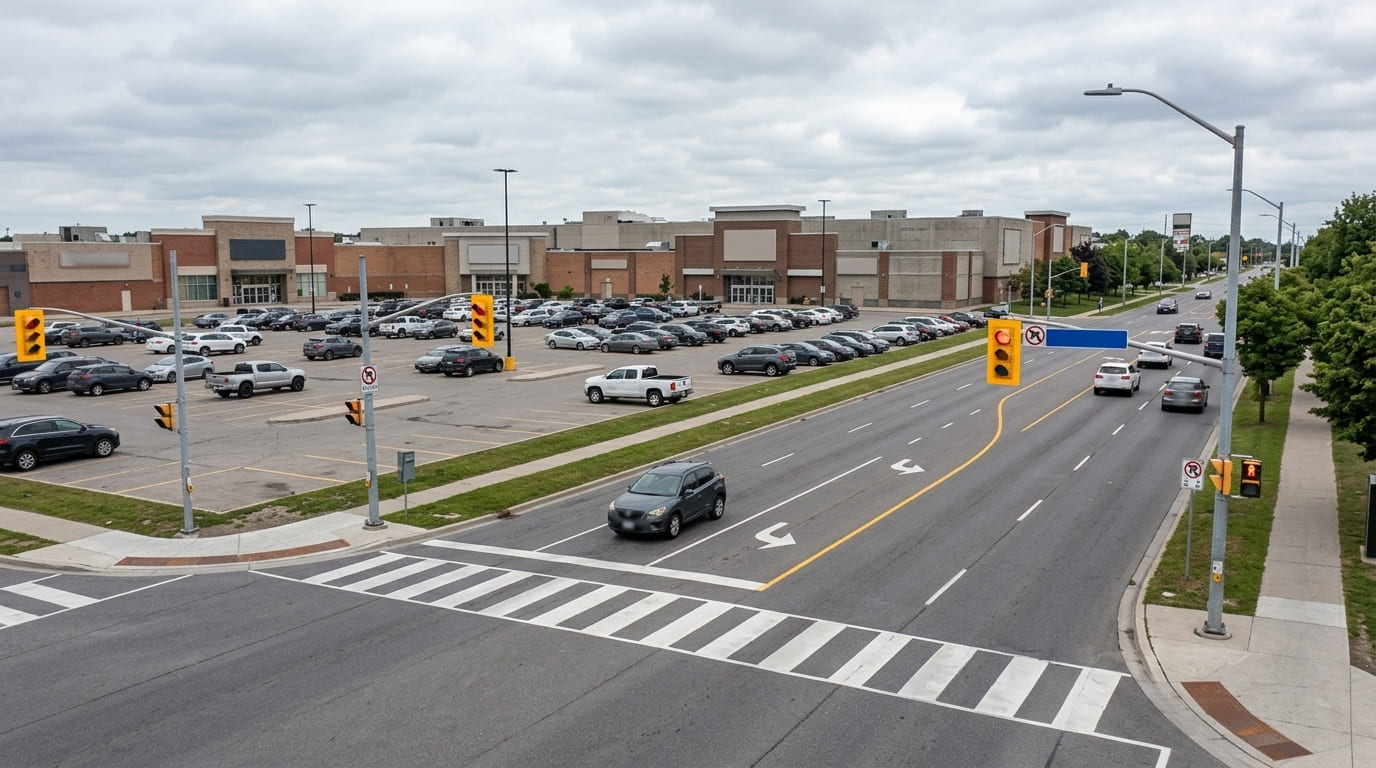
Why practice nearby helps
It gets you comfortable with the kinds of conditions you'll likely face on test day —
- mall traffic and pedestrian crossings
- multi-lane arterials
- turns onto Main Street
What it won't do
There's no official "DriveTest route," and examiners don't test you on a fixed course. Memorizing one stretch of road won't guarantee a pass.
The better approach: practice the underlying skills — observation, signalling, lane positioning, controlled turns — across a few different roads near the centre, not just one.
How to Choose a Good Place to Practice Driving
Whether you're using a designated zone or an ordinary street, check for:
- Traffic level appropriate to your current skill — low for beginners, moderate as you improve.
- Good visibility at intersections and driveways.
- Enough space for the specific skill you're working on, such as three-point turns or parallel parking.
- Manageable pedestrian and cyclist activity, especially near schools and parks.
- A road layout that matches what you're practising — a loop of quiet streets for turns, a stretch with a signalled intersection for traffic-light practice.
- Reasonable weather and road conditions for a learner.
- Confirmed permission. Don't assume a school, church, or shopping-centre parking lot is available just because it looks empty — private property owners can ask you to leave, and some actively prohibit it.
Can G1 Drivers Practice Driving in Brampton?
Yes, but only under specific conditions.
Who must be with you
A fully licensed driver with at least four years of experience (or a certified driving instructor), sitting in the front passenger seat at all times.
Restrictions that affect where and when you practice
- No driving between midnight and 5 a.m. — plan sessions for daytime or evening.
- No 400-series highways or high-speed expressways — this rules out routes like the 401, 410, 407 or QEW, unless a certified driving instructor is your accompanying driver.
- Passenger limits — capped at the number of working seatbelts in the vehicle.
These rules apply everywhere in Brampton, including around the Driving Instruction Zones and the DriveTest Centre, so factor them into your route before you head out. Rules can change, so check the current Ontario Driver's Handbook or DriveTest before relying on this for a specific trip.
Frequently Asked Questions
What's the best place to learn how to drive?
There isn't one single best location in Brampton — it depends on your experience and what you're practising. Beginners do better in a controlled setting, like a lesson at a designated instruction zone. More experienced learners benefit more from real residential and suburban roads.
What is the cheapest way to learn to drive?
Practising with a qualified accompanying driver — a parent, relative or friend who meets the G1 supervisor requirements — costs nothing beyond fuel and insurance. Paying for professional driver training in Brampton adds cost but gives you structured, licensed instruction. Exact pricing varies by school, so check current rates directly with instructors rather than relying on published figures that may be out of date.
What is the No. 1 reason for failing a driving test?
There's no single official statistic confirming one universal top reason. Common issues examiners flag include:
- incomplete observation checks (shoulder checks, mirror checks)
- poor lane positioning
- unsafe turns or lane changes
Focusing on these fundamentals matters more than trying to guess one specific failure point.
Do I fail if I can't parallel park?
Ontario's G2 and G road tests assess a range of required manoeuvres, not just parallel parking in isolation. How a mistake affects your result depends on the nature and severity of the error as assessed by the examiner. Check the current official test requirements on DriveTest rather than relying on assumptions about any single manoeuvre.
Who has failed their driving test the most?
There's no reliable public record identifying this, and it isn't something worth worrying about — focus on your own preparation instead.
What do most people fail on a driving test?
No official Ontario statistic breaks this down publicly. Anecdotally, and from common driving-instructor feedback, frequent problem areas include observation habits, speed control, signalling and lane changes — treat this as general guidance, not a confirmed statistic.
How can I impress a driving examiner?
Examiners aren't looking to be impressed — they're checking for safe, consistent, observable habits:
- checking mirrors and blind spots
- signalling early
- keeping to the speed limit
- staying calm through turns and intersections
Practising those basics consistently across different Brampton roads matters more than any single technique.